
A transcript without speakers is half a document
Wall-of-text transcripts force the next person to re-listen. For interviews, panels, and standups, the valuable unit is not “words that were said” — it is who owned the claim, the joke, or the decision.
Diarization turns the recording into dialogue: labeled speakers, stamped lines, and a document you can search and quote without reconstructing the room from memory.
How Braiv separates speakers
The model listens for vocal characteristics and acoustic signatures, then clusters turns into Speaker 1, Speaker 2, and so on. You rename those labels once; the assignment holds across the file.
That is enough for most podcasts, customer calls, and training sessions. You spend time verifying names and terms, not drawing boundaries on a waveform.
Timestamps make long files navigable
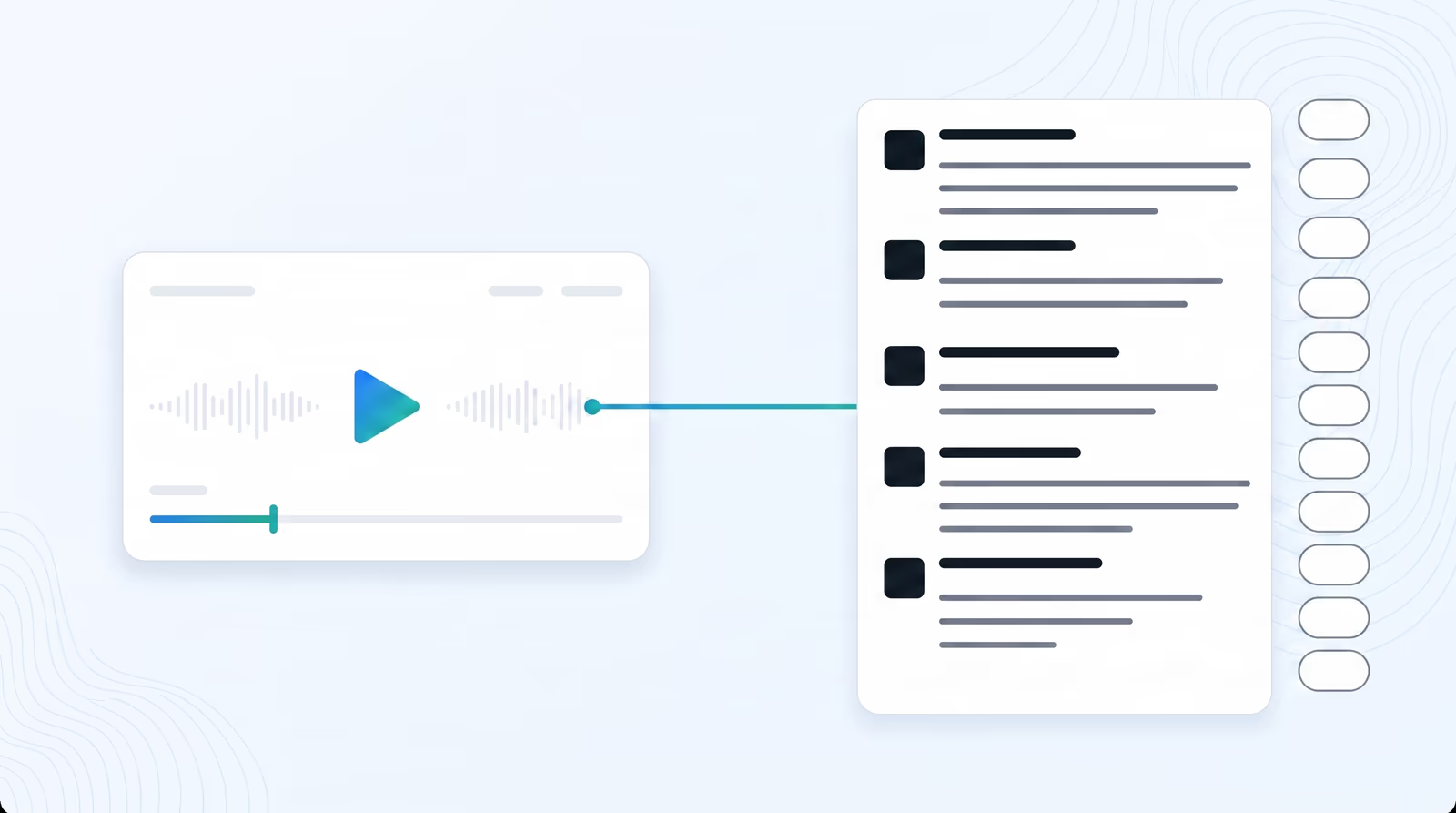
Hour-long interviews are unusable as plain text. With diarization and timestamps, editors jump to the moment, copy a attributed quote, and move on.
The same timeline bindings feed subtitle exports and later localization — the script stays a production asset, not a disposable dump.
From labeled script to translation and dubbing
Speaker-aware text is easier to translate and easier to dub: turns stay intact when you push into 80+ translation languages or send the job into Braiv Dubbing.
Upstream accuracy still matters — start from solid multilingual speech-to-text so labels are attached to the right words.
Where this sits in Braiv Transcription
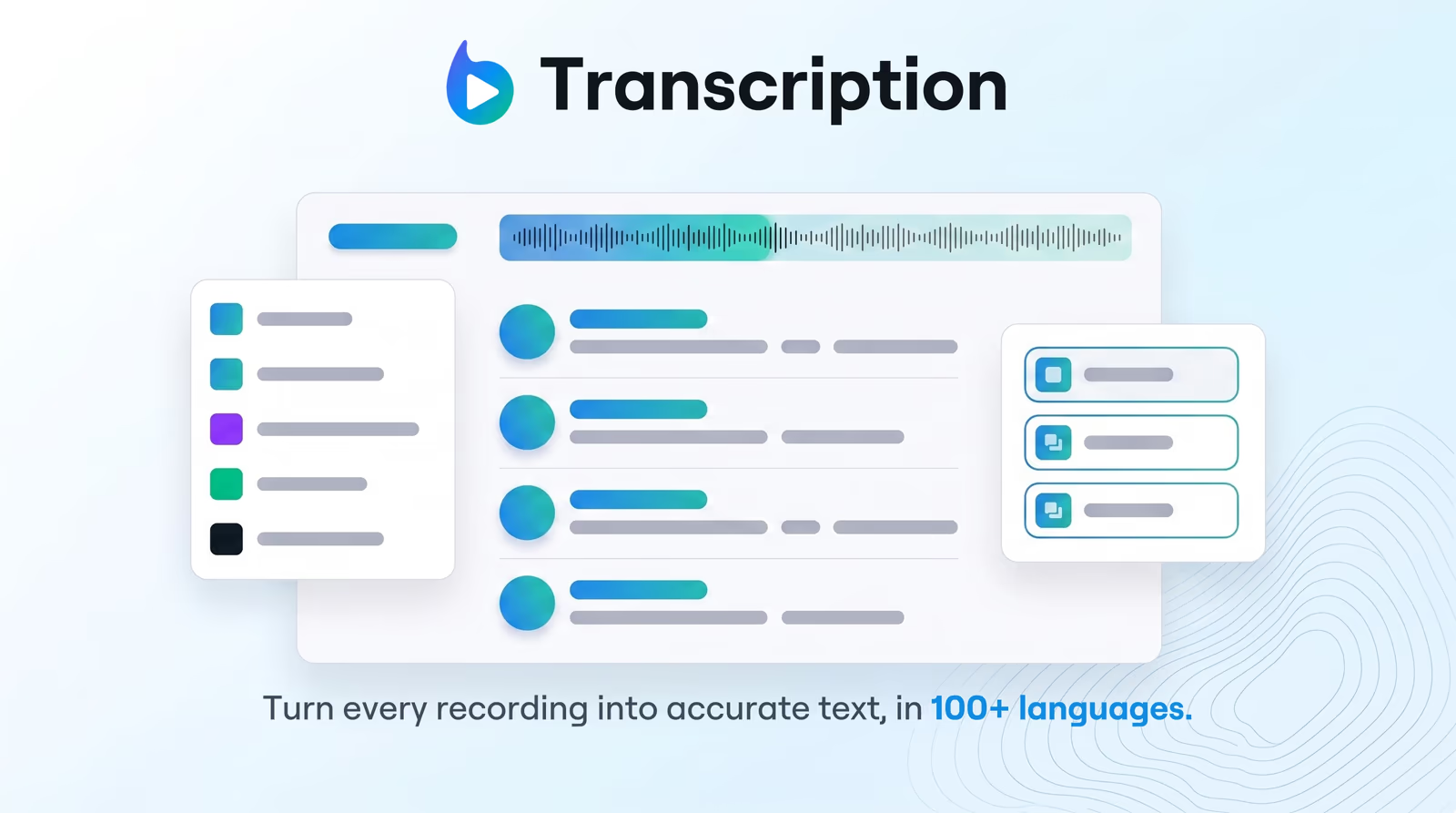
This is the speaker-labeling attribute inside Braiv Transcription. The same product also covers transcription in 100+ languages and transcription translation. Credits and plans on pricing.