Early access Braiv Capture waitlist is open — record once, publish support videos in every language.

Braiv Capture vs Loom

The Loom alternative for publishable, localized support videos

Loom is built to send a recording quickly. Braiv Capture is built to publish one — cleaned narration, translated on-screen text, and a screencast of your localized product.

Trusted by 100,000+ creators, podcasters & businesses globally
Creators and teams who trust Braiv for AI video production
domaine homes logo
puma logo
tesla logo
micd-up logo
antler logo
canva logo
thirdi logo
screenapp logo
anchored outdoors logo
domaine homes logo
puma logo
tesla logo
micd-up logo
antler logo
canva logo
thirdi logo
screenapp logo
anchored outdoors logo
Side by side

Braiv Capture and Loom, row by row

Competitor behaviour below reflects Loom’s public product pages as checked on 9 August 2026, including their transcript and caption language claim.

Capability Braiv Capture Loom
Available today Early access waitlist Included
Screen recording with voiceover Included Included
Instant share link for async messaging Not included Included
Captions and transcripts in many languages Included 50+ languages
Spoken narration dubbed into other languages Included Not included
Narration rewritten and revoiced in your cloned voice Included Not included
On-screen text, titles and callouts translated Included Not included
Demo re-recorded in your localized UI Included Not included
Matching step-by-step article per language Included Not included
The short answer

Which one should you pick?

Loom is still the best way to send a recording to a colleague in the next five minutes. Braiv Capture is for the recordings you publish to customers, in every language they use.

Choose Braiv Capture if

  • The recording is going in a help centre, not a Slack thread
  • You want the narration cleaned up rather than shipped as recorded
  • Translated captions are not enough — the screen has English on it
  • You can wait for early access — Capture is not generally available yet

Stick with Loom if

  • Speed and async messaging are the whole point
  • Your viewers are internal and share your language
  • You want to record and share in one click today
Where Braiv pulls ahead

What turns a recording into something you can publish

Both tools record your screen while you talk. These are the three steps that decide whether the result is a message or a support asset.

01

AI voiceover cleanup and redub

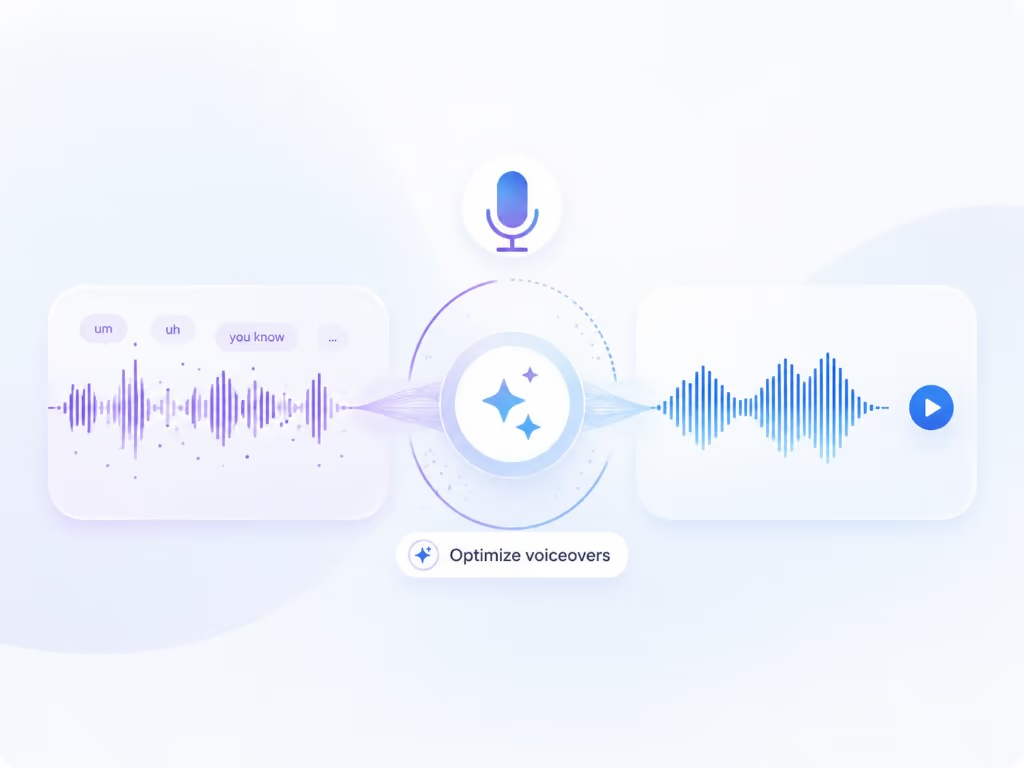
Braiv Capture strips ums, ahs, and false starts from your screen recording, rewrites the narration into support-doc language, then redubs it with a Braiv Speech narration voice clone — so a first take publishes like a scripted one.

Learn more
02

Support video translation, audio and on-screen text

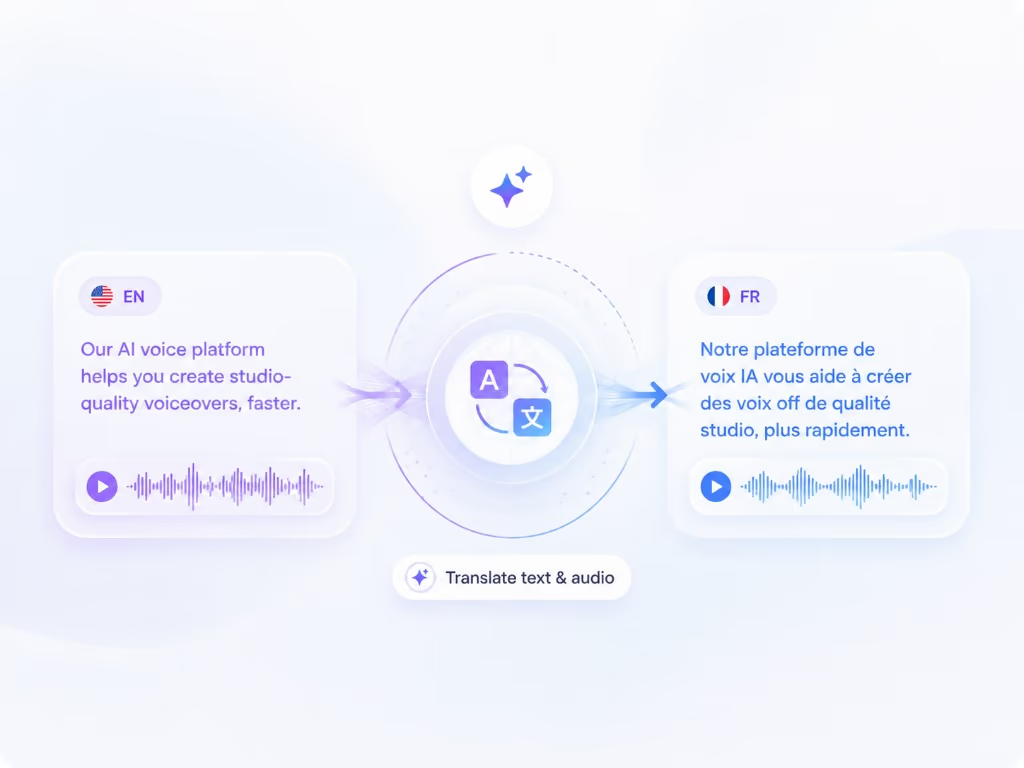
Dub a screen recording into another language and translate the on-screen text with it — narration, captions, callouts, and text overlays localized in the same pass, so a walkthrough never switches back to English halfway through.

Learn more
03

Automated re-recording in a localized UI

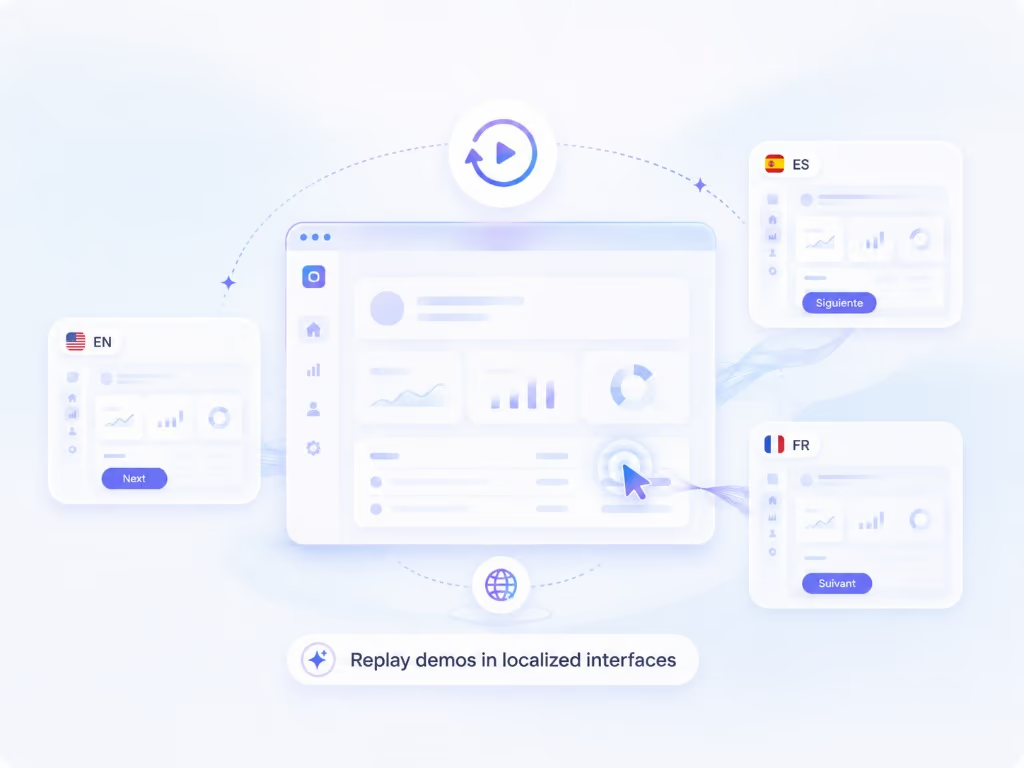
Capture keeps your walkthrough as a replayable session, so the same steps can be re-recorded against your product in another language — a native screencast per market without re-shooting anything.

Learn more
The detail

In more detail

Loom solved a different problem, very well

Loom made screen recording feel like sending a message. Record, get a link, paste it in Slack, move on. For internal communication that is close to perfect, and nothing on this page argues otherwise — if the destination is a colleague, use Loom.

People looking for a Loom alternative for screen recording usually have a different destination in mind: a help centre, an onboarding flow, an academy, a knowledge base. The moment a recording becomes a published asset, two things start to matter that async messaging never needed — how polished the narration is, and whether it works for customers who do not speak your language.

Competitor behaviour on this page reflects Loom’s public product pages as checked on 9 August 2026.

A raw take is fine to send and expensive to publish

Nobody minds an “um” in a two-minute update. In a help-centre video that thousands of customers watch, the rambling first minute, the false start, and the bit where you say “actually, ignore that” all become support debt.

The usual fix is to re-record until it is clean, which is why support libraries stall. Braiv Capture takes the opposite approach: record it badly on purpose, then let Braiv strip the filler words, tighten the wording and regenerate the narration with a Braiv Speech clone of your voice. Your first take is the only take.

Captions in 50+ languages are not a localized video

As checked on 9 August 2026, Loom’s own copy offers transcripts and captions in 50+ languages. That is real value, and it is also a specific, limited thing: text at the bottom of a video whose audio and interface are still English.

Watch that video as a Japanese customer. The narrator speaks English. The menus are English. The tooltip being described is English. You are reading subtitles while trying to map them onto a screen you cannot read.

Capture localizes the layers that actually carry the instruction:

  • Audiodubbed through Braiv Dubbing in a cloned voice, not a stock narrator.
  • On-screen text — captions, titles, callouts and overlays translated in the same pass.
  • The interface itself — the session replayed against your localized product, so a Japanese viewer watches the Japanese UI. Your product needs to be localized already; Braiv records the real interface rather than faking one.

And the article, from the same recording

Support content is rarely just video. The cleaned script that becomes the voiceover also generates the step-by-step written guide, per language, so the article and the video never end up describing different versions of your product.

Early access, stated plainly

Capture is pre-launch. There is no signup button here because there is nothing to sign into yet — access is invite-based and the waitlist below is how you get in.

Keep Loom for the messages. Join the waitlist for the library.

Questions

Frequently asked questions

Is Braiv Capture available yet?
Not generally. Capture is in early access, access is invite-based, and the waitlist below is the queue. If you need to record and send something today, Loom does that better than anything else and there is no reason to wait.
Does Loom translate videos into other languages?
As stated on their site when checked on 9 August 2026, Loom provides transcripts and captions in 50+ languages. That is subtitle and transcript coverage for the viewer — the spoken audio stays in the original language and so does everything visible on screen. Braiv Capture dubs the narration and translates captions, titles, callouts and on-screen text together.
What is the difference between translated captions and a localized video?
Captions ask the viewer to read while watching an interface they cannot read either. A localized video speaks their language and shows their language: dubbed narration in a cloned voice, translated overlays, and — where your product is already localized — the walkthrough re-recorded against the localized interface, so the menus in the video match the menus on their screen.
Can I keep my own voice instead of a stock narrator?
Yes, in every language. The cleaned narration is regenerated with a Braiv Speech clone of your voice, and Braiv Dubbing carries a cloned voice into the localized versions. You choose which voice it clones: your original recording, or the cleaned voiceover.
Do I have to re-record when I fluff a take?
No, and that is the design. Ramble, restart, say "um" — Capture strips the filler words, rewrites the wording into support-doc language and revoices it. Trimming silences in an editor leaves the awkward phrasing; regenerating from a corrected script does not.
Does Braiv Capture write the help article as well?
Yes. The same cleaned script produces a step-by-step guide alongside the video, in each language you publish, so the written and watched versions stay in sync.
Can we use Loom internally and Braiv for the help centre?
That is the split we would expect. Loom for quick internal walkthroughs and async updates; Braiv Capture for the customer-facing library that has to be cleaned, localized and kept current. See Braiv Capture for the full workflow.

Be first to localize your support library

Join the early-access waitlist and we'll reach out when your workspace can record once and publish support content in every language.