
Transcription is the foundation, not a side tool
Most localization stacks fail at the first mile: if the transcript is wrong or missing for a language, every caption, short, and dub inherits the gap.
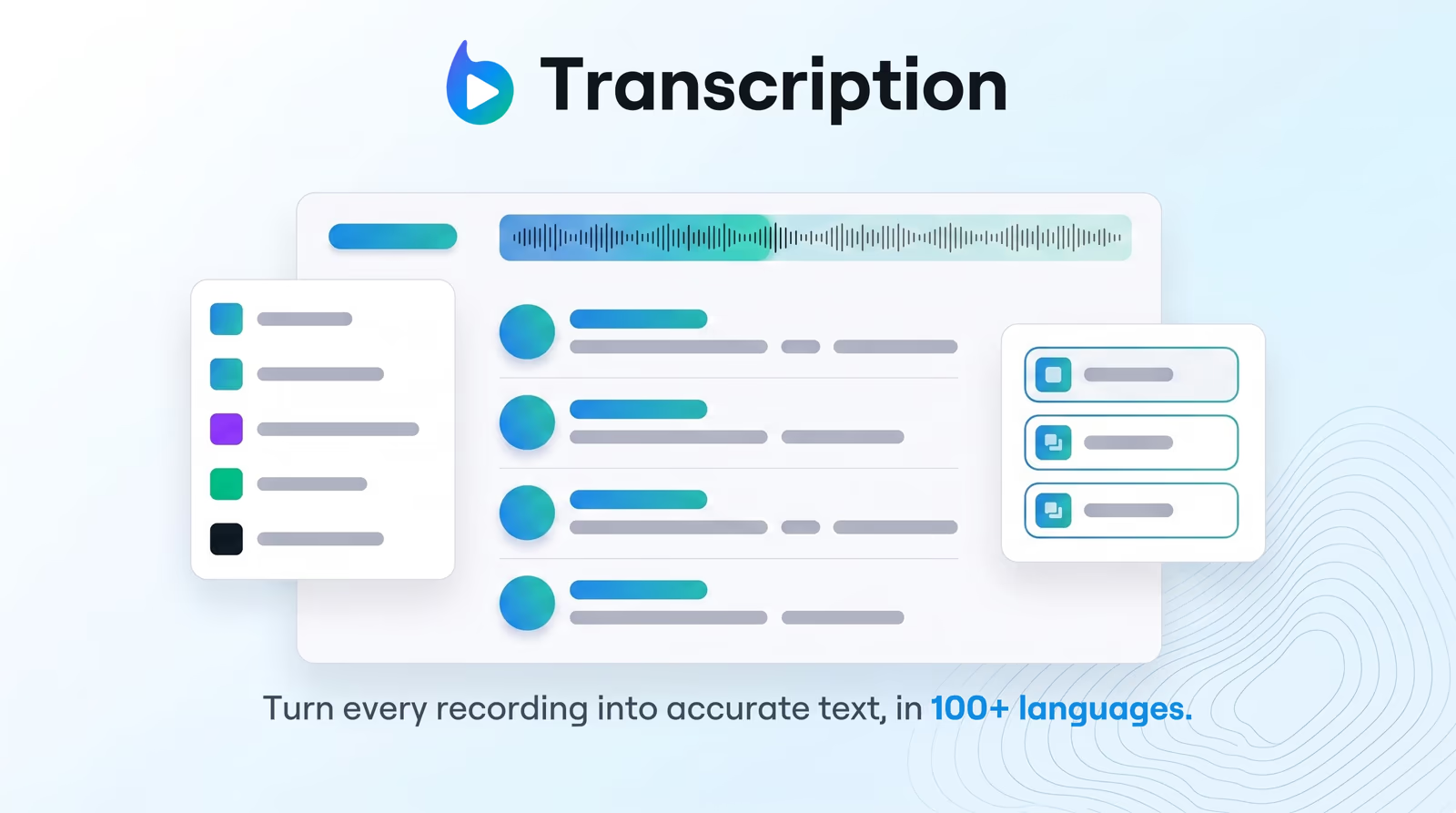
Braiv Transcription treats multilingual speech-to-text as that foundation — 100+ languages recognized so webinars, interviews, and courses become searchable text before you decide what to publish where.
Auto-detect instead of per-file setup
Catalogs are messy. One folder holds an English podcast, a Spanish customer call, and a Mandarin training module. Asking editors to tag language on every upload is how jobs stall.
Upload a file or paste a link; Braiv detects language and starts. Zero-configuration is not a gimmick — it is how mixed libraries get through the queue.
Accents and dialects are part of the job
Real speech is not broadcast English. Automatic accent and dialect handling means regional variation is expected input, not an error class you configure around.
That accuracy is what makes the next steps safe: speaker diarization needs a clean base script, and translation into 80+ languages should not be fixing recognition mistakes in every market.
From text to the rest of Braiv
A finished transcript exports as TXT, SRT, VTT, DOCX, or JSON — or feeds captions and dubbing without re-uploading. Multilingual STT is stage one of the pipeline, not a siloed converter.
See Braiv Transcription for the full product surface and pricing for credit detail.
Where this sits in Braiv Transcription
This is the language-coverage attribute inside Braiv Transcription. The same product also covers AI speaker diarization and transcription translation.