
Translated audio over an English screen does not help
Support video has a stricter test than marketing video. The viewer is following along in their own product, in their own language, trying to find the button you just described. If your recording shows a different interface, the localization has failed even though the audio is perfect.
That is the gap this closes: the screen has to be localized too.
A capture is a session, not just a file
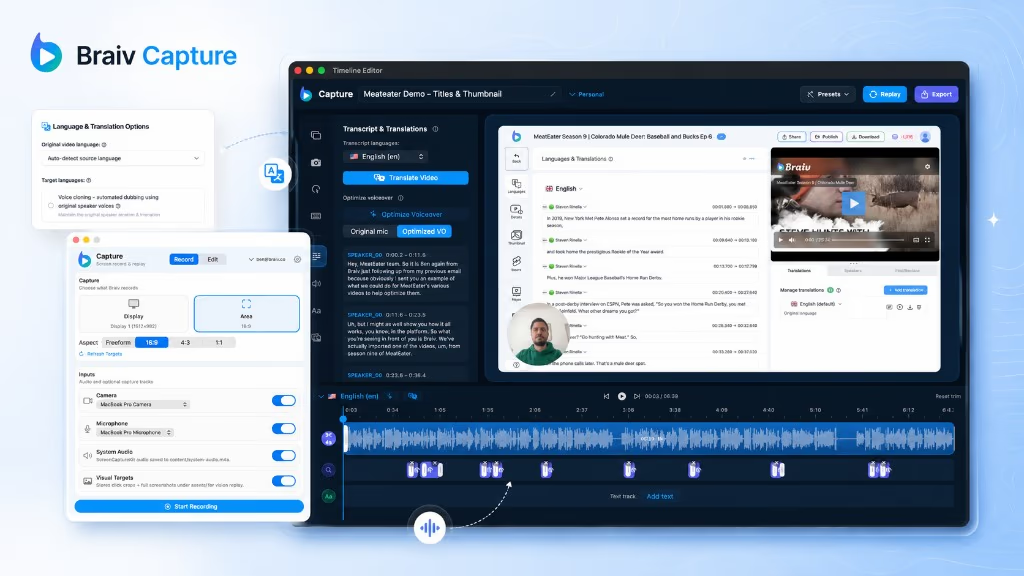
Most screen recorders produce a video. Capture produces a video plus the walkthrough behind it — the steps, the order, the pacing. That makes the demo repeatable.
Switch the product to another language, replay the session, and you get a new recording of the same task in that interface. Nothing is re-shot by hand, and nothing drifts between versions because every language follows the same captured path.
Software demo video examples, and what each one needs
“Software demo video” covers four fairly different jobs. They fail for different reasons, and only one of them is about production value.
- The feature walkthrough. One capability, two to four minutes, aimed at a customer who already bought. Fails when the narrator explains the interface instead of the task. Needs: the real product, the real click order, and wording tight enough to follow at 1.5× speed.
- The onboarding demo. The first-run path, shown end to end. Fails when it shows a mature account full of demo data that a new user will never recognise. Needs: an empty-state start and a visible outcome at the end.
- The sales demo per market. The same story told to a prospect in Madrid or Tokyo. Fails when the interface on screen is English — prospects read that as “this product is not really for us”. Needs: the localized UI, which is exactly what replay produces.
- The support fix. A single task answering a single ticket. Fails when it goes out of date silently after a release. Needs: to be cheap to re-record, which replay makes it.
Notice what none of them need: a studio, a script written in advance, or an actor. Three of the four need the demo to exist in more than one language, and all four need it to still be true next quarter.
The economics of the tenth language
Manual localization of support video scales linearly and painfully: twenty walkthroughs across six languages is a hundred and twenty recording sessions, each one needing someone who knows the product and the language.
Replay changes the unit of work. You record once per walkthrough, then re-run per language — which is why teams that stopped at English (or English plus one) can consider a genuinely multilingual help centre.
Also the answer to release churn
The same mechanism handles the other support-content problem: your UI moved. Instead of a backlog of “re-record this video” tickets across every language, the session is replayed against the current build and the library refreshes.
Where this sits in Braiv Capture
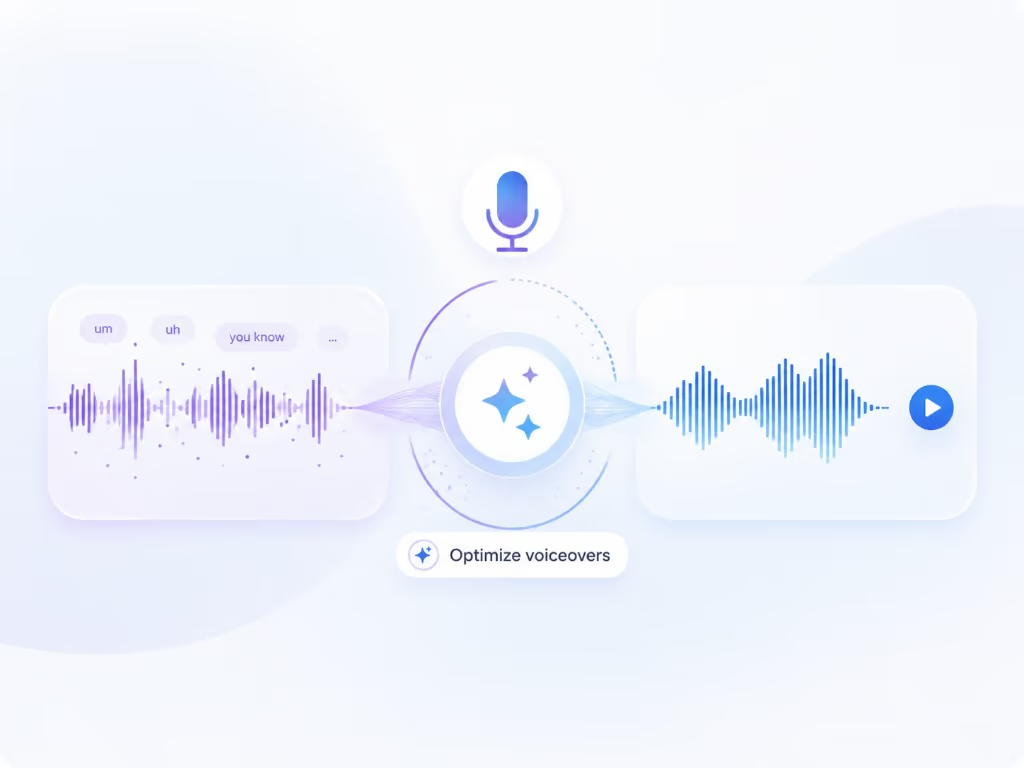
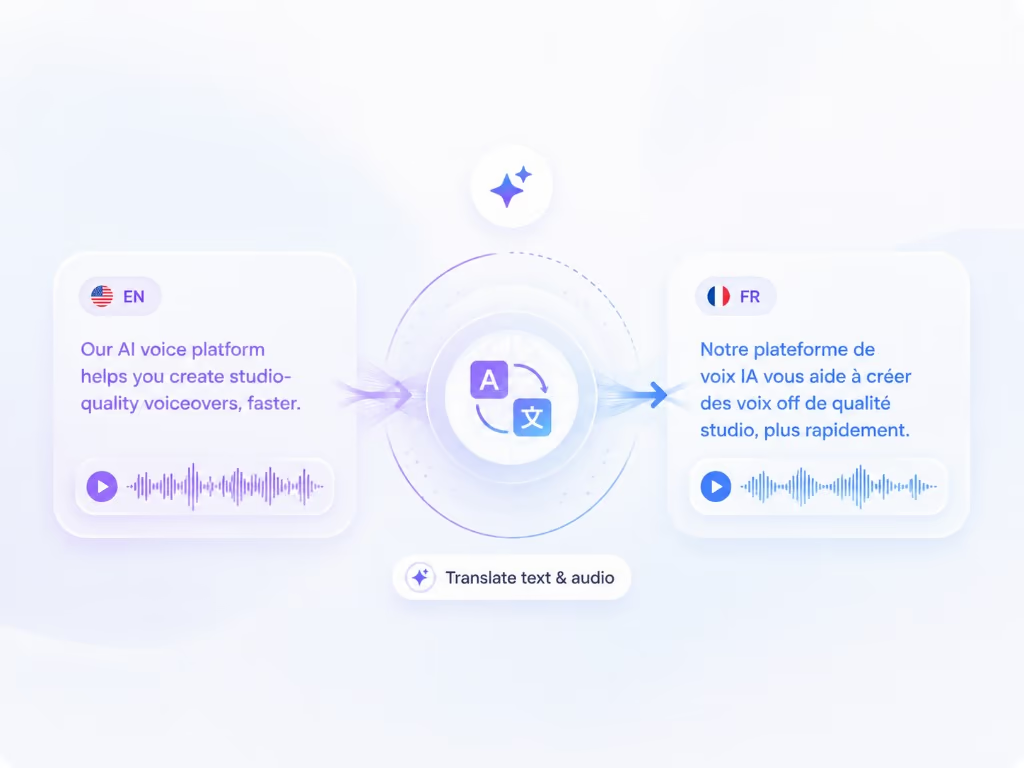
This is the demo-fidelity attribute inside Braiv Capture, and it works with voiceover cleanup — narration from a Braiv Speech clone — and support video translation, which runs on Braiv Dubbing. If the video already exists and only the audio needs localizing, Braiv Dubbing on its own is the simpler path.