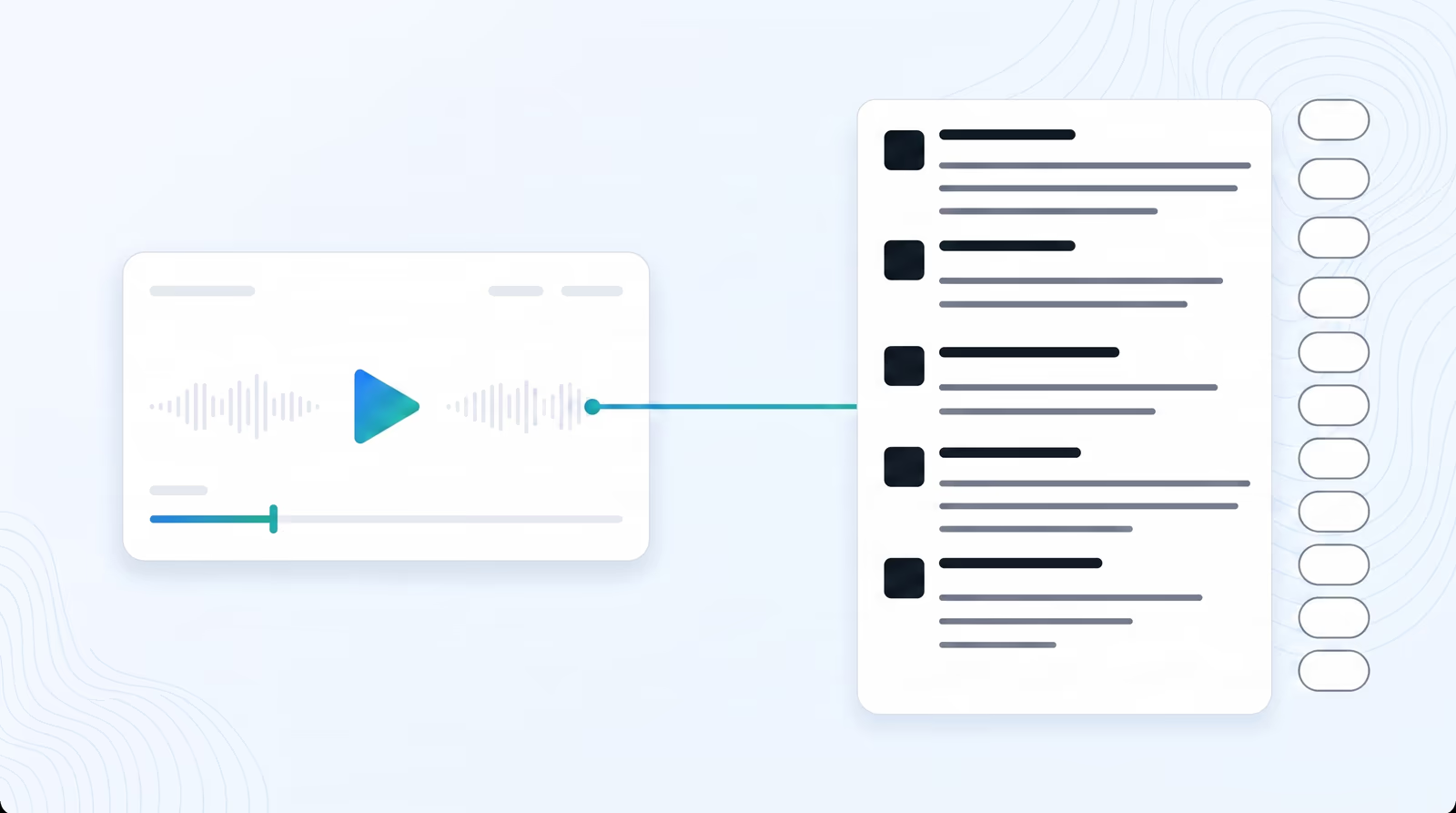

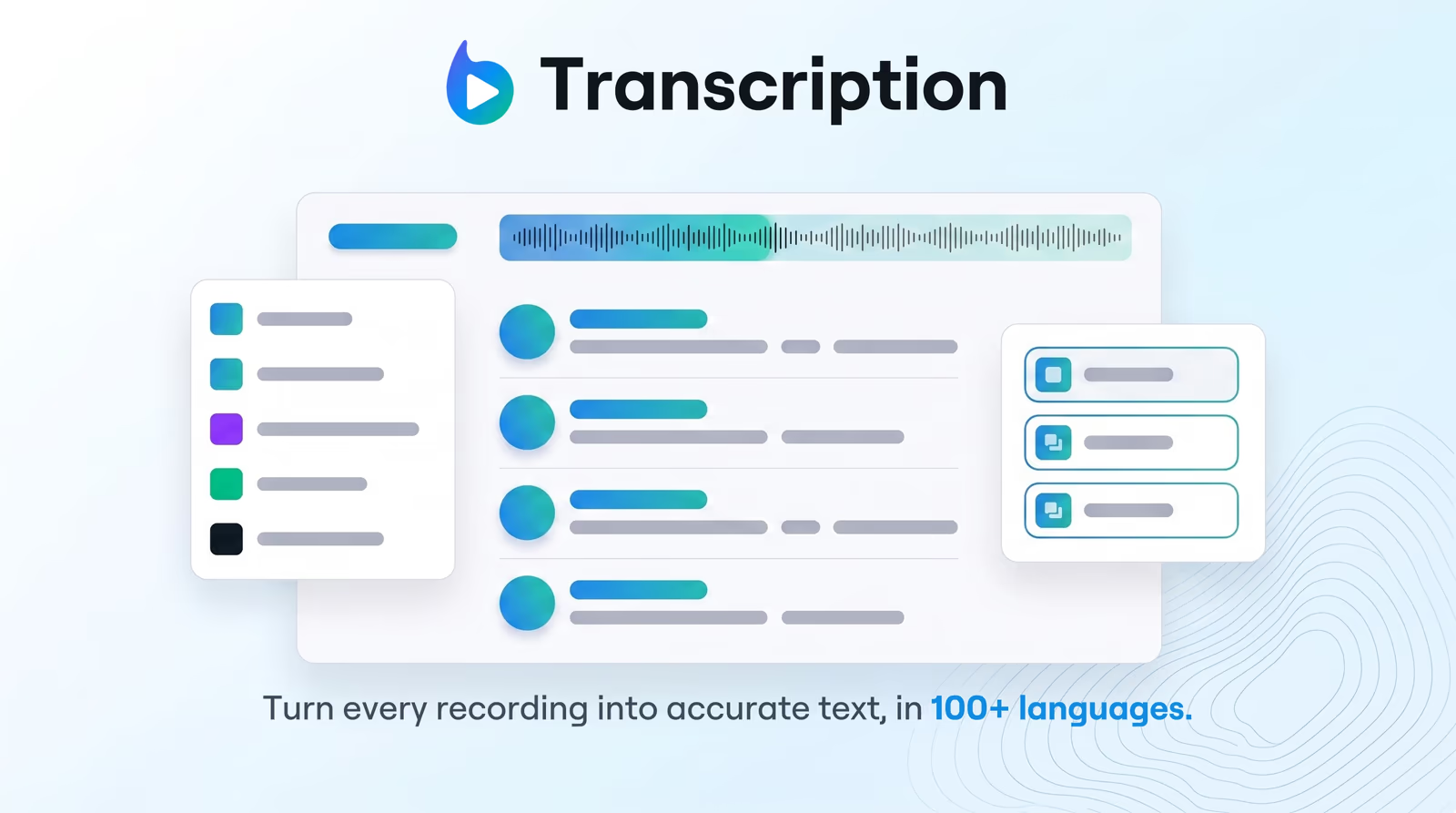
Turning a YouTube video into a blog post means rewriting spoken content as an article: a lead that states the point, headings that group the ideas, and paragraphs edited for reading rather than timing. In Braiv, you paste the YouTube URL, Braiv Transcription produces the transcript, and the blog format turns it into a draft you edit and publish.
Every video library is a blog backlog
Most teams publish to YouTube and never republish the ideas on their own site. It is rarely a content problem — the ideas already exist — it is the cost of turning forty minutes of speech into something someone will read.
The shortcut people reach for, pasting auto-captions into a CMS, makes the problem worse. Readers bounce off unedited dialogue, and a thin verbatim page adds nothing your video did not already do.
How the post is generated
- Import the YouTube link, or upload the file.
- Transcribe using speech to text in 100+ languages.
- Generate the blog format in Studio → Details.
- Edit the draft: sharpen the intro, add internal links, images, and a call to action.
- Publish to WordPress, Webflow, or your CMS.
For interviews and panels, run speaker diarization first so quotes are attributed correctly in the draft — otherwise the post reads as one voice when it was three.
Why a post earns traffic the video cannot
The watch page ranks in YouTube search and, sometimes, in video results. It does not build authority on your domain, it cannot be excerpted into a newsletter, and it is not much use to a reader who wants to skim.
An article does all three. Publishing both means one recording serves the audience that watches and the audience that reads — and the post can link back to the video, which is a better outcome for both.
Which format for which video
- Blog post — interviews, talks, podcasts, commentary, and thought leadership.
- Support article — tutorials and walkthroughs, where numbered steps beat narrative.
- Timestamped summary — chapters and key topics for the YouTube description itself.
All three come from one transcription pass, so choosing a second format costs a generation rather than a re-import.
Localize the post with the script
Translate the transcript via transcription translation, then generate or edit the post per language. Localized posts written from a translated script read better than a machine-translated English article, and they let you match local search phrasing. When the post promotes a channel upload, hand titles and metadata to Braiv Connect so article and video packaging stay aligned.
Where this sits in Braiv Transcription
This is a long-tail capability of Braiv Transcription, alongside 100+ language transcription, speaker diarization, and transcription translation. Generation draws on the shared AI Credit balance — plan detail on pricing.