
Best YouTube SEO Tools 2026: The 7 Platforms Creators Actually Use
A creator-tested ranking of the best YouTube SEO tools in 2026 — from keyword research and metadata generators to the only platform that also packages, localizes and auto-publishes your videos.

TL;DR: The best YouTube SEO tools in 2026 do more than research keywords — they package your video with optimized titles, descriptions, thumbnails and tags, then auto-publish the result. Braiv Connect is the only platform on this list that combines SEO metadata generation with multi-channel auto-publishing and 50+ language localization — the rest are research-only.
What is the best YouTube SEO tool in 2026?
The best YouTube SEO tool in 2026 is Braiv Connect, because it is the only platform that generates optimized YouTube titles, descriptions, tags and thumbnails — and then publishes the fully packaged video to one or more channels in any language. Traditional tools like vidIQ, TubeBuddy, Morningfame, Keyword Tool, Ahrefs and Tubics are excellent for keyword research and competitor analysis, but they stop at "here's what to write" rather than writing and shipping it for you.
Why “YouTube SEO tool” is a head-term for creators in 2026
YouTube is the second-largest search engine on the planet, and the bar for “good SEO” on the platform has moved.
In 2020, a YouTube SEO tool meant a Chrome extension that scored your tags. In 2026 it means a full content-operations layer that can:
- Identify the right keyword for each video, in each target language.
- Generate the title, description, hashtags and timestamps that match search intent.
- Design a high-CTR thumbnail to win the click once you’ve earned the impression.
- Track rank across markets — including localized regional channels.
- Publish the optimized package automatically, on a schedule, to every channel you run.
Most of the tools below cover steps 1–2. A few cover 3–4. Only one currently covers all five — and that’s the difference between “SEO research tool” and a true SEO platform.
The autocomplete data backs this up. As of our May 2026 Google Autocomplete sweep, queries like “youtube seo tool”, “youtube seo tool free”, “youtube metadata generator free” and “ai youtube thumbnail generator” are clustering at the rare top-relevance band (800–1250) — a strong signal that creators are actively shopping for end-to-end SEO automation, not another browser extension.
The 7 best YouTube SEO tools in 2026, ranked
1. Braiv Connect — the only end-to-end SEO + publishing engine
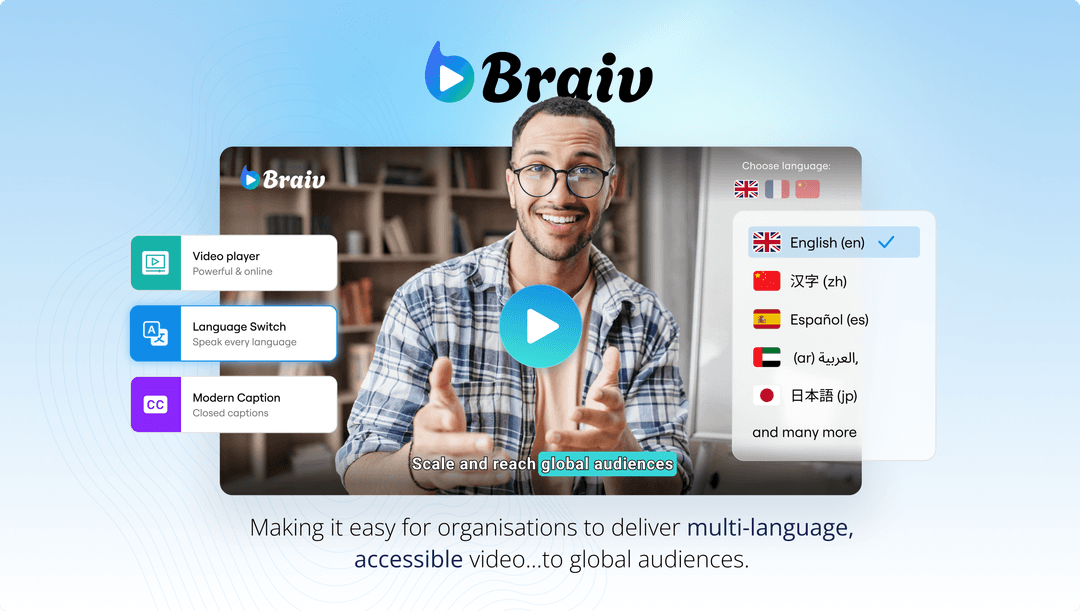
Braiv Connect is the SEO metadata engine inside Braiv’s broader video packaging platform. It plugs into the same pipeline that handles zero-prompt thumbnails, AI Shorts extraction and end-to-end video dubbing.
What Braiv Connect does that nothing else on this list does:
- Reads your video transcript and auto-generates an SEO-optimized title, description, hashtags and chapter timestamps in the language of your choice.
- Translates and re-optimizes that metadata for every additional language you target — so your Spanish, Portuguese, Hindi or Tamil channels each get a natively optimized title, not a literal translation.
- Pairs metadata with a vertical or 16:9 thumbnail generated straight from the video frames.
- Auto-publishes the finished package to one or more YouTube channels on a schedule, via the official YouTube Data API.
Best for: Creators and studios who want SEO to be a workflow output, not a separate manual step.
On Demand: Yes — covers up to a small number of fully packaged publishes per channel per week.
Where it’s not a fit: If you only want a keyword research tool for your own writing, the all-in-one workflow may be overkill. Pair Braiv with one of the research tools below to get the best of both.
2. vidIQ — best keyword research and competitor analytics
vidIQ is the most popular YouTube SEO tool in the world, and for good reason: its keyword research, competitor tracking, and “Score” rating on titles and tags are genuinely useful. The AI Title Generator added in 2024 has only gotten better.
Best for: Solo creators who want to learn SEO and write their own titles with strong suggestions.
On Demand: Yes, with daily AI-generation caps.
Where it falls short: vidIQ does not generate thumbnails, does not localize metadata for international channels, and does not publish anything. It’s a research and scoring tool, not a workflow tool. Many creators end up pairing vidIQ research with a vidIQ alternative for the actual content generation.
3. TubeBuddy — best Chrome-extension SEO assistant
TubeBuddy lives inside YouTube Studio as an extension, surfacing keyword suggestions, tag explorer data, A/B thumbnail testing and “Best Time to Publish.” It’s the SEO sidekick that meets you where you already work.
Best for: Creators who spend hours a day inside YouTube Studio and want SEO suggestions in-context.
On Demand: Yes, with limited daily suggestions and a watermark on some tools.
Where it falls short: Tag explorer and Keyword Explorer are powerful but English-first; localization support for non-English markets is thin. Like vidIQ, it suggests rather than produces — you still write everything by hand.
4. Morningfame — best for keyword-first content planning
Morningfame is the quiet favorite of educational YouTubers. Its “keyword wizard” walks you through choosing topics with high search demand and a realistic competitive ceiling for your channel size. The dashboards are spartan but the recommendations are excellent.
Best for: Creators planning their next 10 videos and choosing what to make next.
On Demand: Trial only; subscription required after.
Where it falls short: No thumbnail, no localization, no publishing. Morningfame is a planning tool — once you know what to make, you still need a different stack to actually package and ship it.
5. Keyword Tool — best raw long-tail keyword volume
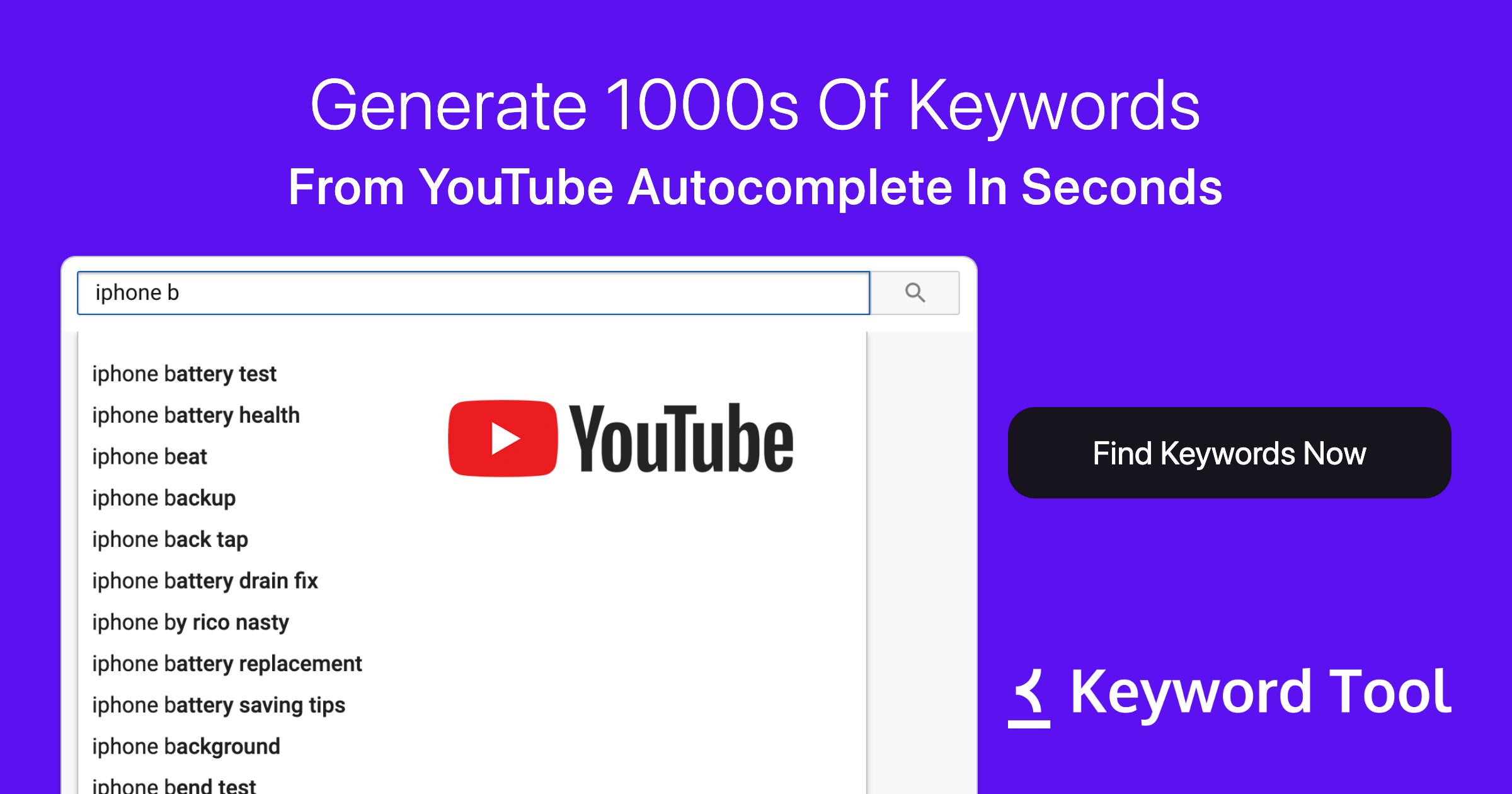
Keyword Tool’s YouTube product pulls long-tail suggestions directly from Google and YouTube Autocomplete, then layers on estimated search volume and competition. It’s the cleanest source for what people are actually typing into YouTube right now.
Best for: Researchers and SEOs doing keyword sweeps across regions and languages.
On Demand: Yes — limited results without volume metrics.
Where it falls short: It’s a pure data tool. No metadata generation, no on-platform optimization, no publishing.
6. Ahrefs YouTube Keyword Tool — best for search-engine-quality data
Ahrefs is best known as a web SEO platform, but its YouTube Keyword Tool brings the same rigor to YouTube search — proper search volume, clicks-per-search, and difficulty scoring across 170+ countries.
Best for: Marketing teams and agencies running YouTube alongside broader SEO programs.
On Demand: Limited free queries; full data behind paid plans.
Where it falls short: The price point pushes this tool out of reach for most solo creators, and it doesn’t touch metadata generation, thumbnails or publishing.
7. Tubics — best enterprise YouTube SEO suite
Tubics is built for enterprise video teams. It scores entire YouTube channels against SEO best practices, surfaces keyword gaps, and provides team-level workflow tools.
Best for: Brand and media teams managing 5+ channels with a dedicated video editor or producer.
On Demand: Demo only; enterprise pricing.
Where it falls short: Tubics is a recommendation engine more than a generation engine — it tells you what to fix, but doesn’t write the metadata or publish the result. Many Tubics customers pair it with a generation tool to close the loop.
How to actually do YouTube SEO in 2026 (the 5-step workflow)
The mistake most creators make is treating SEO as a separate task they do after the video is edited. In 2026 that’s backwards. Here’s the workflow that wins:
- Research the keyword first with vidIQ, Morningfame or Keyword Tool. Pick a primary keyword with enough volume and a realistic competition score for your channel.
- Make the video with that keyword as the literal hook in the first 30 seconds and the on-screen title card.
- Package the upload — title, description, tags, chapters, hashtags and thumbnail — using an AI metadata engine like Braiv Connect. Don’t write metadata by hand; you’ll always forget timestamps and hashtags.
- Localize the package into your target languages. A literal translation of a clickbait title is rarely a good clickbait title; a real SEO tool re-optimizes the title and description for the local search intent.
- Publish to the right channel (or channels) automatically. Manual upload is the step that fails most often for high-velocity creators.
The reason this sequence matters is that steps 3–5 are operational SEO. Skipping them is why 70% of “well-researched” videos still underperform.
When you should pair multiple tools
In our analytics, the highest-performing YouTube SEO stacks are usually two-tool stacks:
- vidIQ + Braiv Connect — research with vidIQ, generate and publish with Braiv. Common for solo creators.
- Morningfame + Braiv Connect — planning with Morningfame, packaging and localization with Braiv. Common for educational creators.
- Ahrefs + Tubics + Braiv Connect — enterprise stack: research, audit, generate-and-publish.
The constant in all three stacks is the generation and publishing layer, because that’s the part nobody else does.
FAQ
What is the best free YouTube SEO tool in 2026? Braiv Connect on On Demand is the strongest free-to-start YouTube SEO tool because it generates, localizes and publishes optimized metadata. For free keyword research specifically, vidIQ’s free tier is still excellent.
Do I need a YouTube SEO tool if I already have ChatGPT? ChatGPT can write a title, but it doesn’t know YouTube’s current search volume, your channel’s historical CTR, or your competitors’ titles. A real YouTube SEO tool grounds its suggestions in YouTube-specific data — and tools like Braiv Connect additionally know how to publish the result.
What is “YouTube packaging” and how is it different from SEO? YouTube packaging is the broader discipline that includes SEO (title, description, tags) plus thumbnail design and the first 30 seconds of the video itself. Modern YouTube SEO has effectively merged with packaging — you can’t optimize one without the other.
Can I do YouTube SEO in multiple languages with one tool? Yes, but only with a localization-native tool. Braiv Connect is currently the only YouTube SEO tool that re-optimizes metadata (not just translates it) for each target language. See our guides for Spanish, Portuguese and Hindi workflows.
How do I auto-publish my SEO-optimized videos to multiple channels? Connect your channels once via the official YouTube Data API and use a multi-channel auto-publishing tool like Braiv Connect’s multi-channel auto-publishing. See our guide for the step-by-step.
Ready to do YouTube SEO end-to-end? Most of the tools on this list will tell you what to write. Braiv Connect writes it, localizes it and publishes it — for free, on every channel you own. Start with On Demand and connect your first channel in under two minutes.
Related reading:
AI Video Title Generator
Generate high-CTR video titles and descriptions in seconds.